KSM-66 Ashwagandha®: What It Is and How It Compares
KSM-66 is a branded, root-only ashwagandha extract standardized to 5% withanolides. Here's what sets it apart, how it compares and how to spot it on a label.
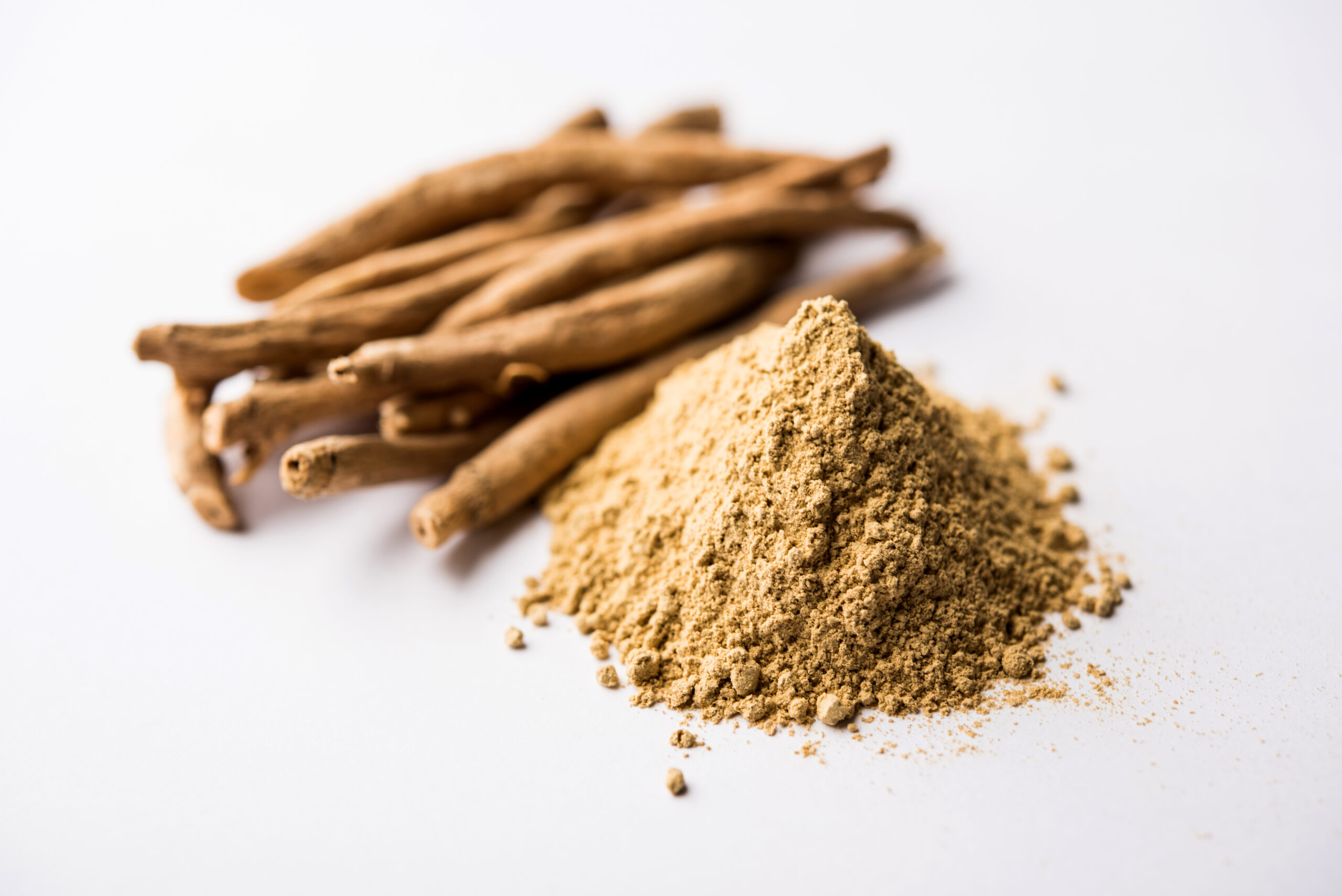
Flip over an ashwagandha label and you may spot six extra characters: KSM-66. It isn’t a strength rating or a batch code. It’s the name of one specific ashwagandha root extract, made to one standard, and it’s the ingredient inside our new Organic KSM-66 Ashwagandha® Root Extract Powder.
Here’s what sets KSM-66 apart, how it compares to the other options on the shelf, what researchers have actually tested, and how to spot it on a label.
What Is KSM-66 Ashwagandha®?
KSM-66 Ashwagandha® is a branded, trademarked extract of ashwagandha root (Withania somnifera). Rather than being ground into a powder, the dried root is extracted and the result is standardized to a set level of withanolides, the natural compounds most often used to measure ashwagandha’s strength. Think of it as ashwagandha with a fixed recipe: the same plant part, the same process and the same measured content, batch after batch.
How KSM-66 Differs From Regular Ashwagandha
“Ashwagandha” on a label can mean anything from ground root to a blend of root and leaf. KSM-66 narrows that down in three ways.
Made From the Root Only
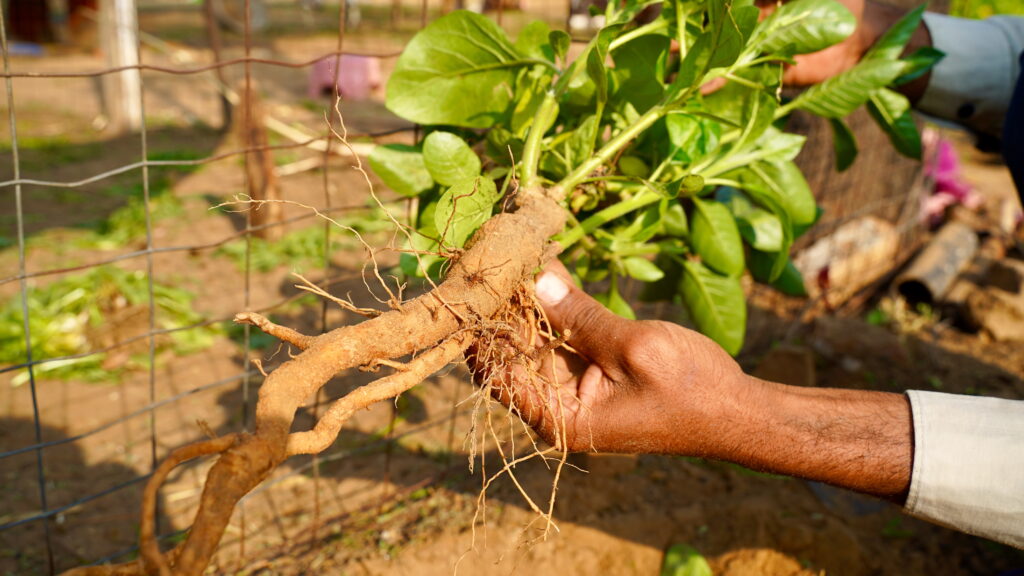
Ashwagandha’s root and leaves have different chemical makeups, and the root is the part traditionally used in Ayurvedic practice. KSM-66 is made from the root only, with no leaves blended in.
Starting from one plant part every time also keeps the extract consistent. The NIH notes that most commercial ashwagandha supplements use root extract, so a root-only ingredient sits right where most of the market and the research already are.
Extracted Without Alcohol
Ashwagandha extracts can be made with water, alcohol or a mix of the two. According to its maker, KSM-66 is made with a water-based process, without alcohol or chemical solvents. If you compare supplements by how they’re processed, that’s a useful detail to know.
Standardized to 5% Withanolides
Ground root naturally varies from harvest to harvest, so two bags of plain powder can carry different amounts of withanolides. KSM-66 is standardized to 5% withanolides, so every batch is made to the same measured level and the number on the label reflects a measured standard. For you, that means each level scoop provides a standardized amount of withanolides, rather than relying on the natural variation of plain root powder.
KSM-66 vs. Sensoril vs. Plain Root Powder
KSM-66 isn’t the only name on the shelf. Sensoril is another branded extract, and plain ground root is the most common ashwagandha powder you’ll find. Here’s how the three line up.
| KSM-66 | Sensoril | Plain root powder | |
|---|---|---|---|
| Plant part | Root only | Root and leaf | Whole root, dried and ground |
| Process | Water-based extraction | Water-based extraction | Ground, not extracted |
| Standardized to | 5% withanolides | At least 10% withanolide glycosides | Usually no listed percentage |
A quick note on those percentages: KSM-66 lists withanolides, while Sensoril lists withanolide glycosides, a narrower group of related compounds measured a different way. They describe different things, so a bigger number isn’t a head-to-head score. The clearer differences are the plant part and the process.
What Researchers Have Studied
KSM-66 is the extract that turns up most often in the stress and sleep studies the NIH has reviewed. In the stress research the NIH summarizes, three of the six extract studies used KSM-66, more than any other single extract. In a 2021 analysis of sleep studies, four of the five did too. Appearing often isn’t proof on its own, and none of these studies tested a finished product like ours. It does mean there’s more published research on this exact extract to read. Two of those trials show what that research looks like up close:
- Stress (2012): 64 adults under stress took a 300 mg KSM-66 capsule or a placebo twice a day for 60 days. Researchers tracked scores on standard stress questionnaires and blood cortisol, a hormone tied to the body’s stress response.
- Sleep (2021): 80 adults, half of whom had trouble sleeping, took KSM-66 or a placebo for 8 weeks while wearing wrist monitors that track rest. Researchers tracked sleep quality and how long it took participants to fall asleep.
Keep the limits in view. These trials were small and short, most were run in India, and the extract was supplied by its maker. They tested KSM-66 itself in capsules, not any one brand’s finished product, including ours. For a broader look at ashwagandha research and the different formats, see our ashwagandha gummies guide.
How to Read a KSM-66 Label
When you’re comparing labels, here’s what to look for:
Because KSM-66 is a trademarked ingredient, products that use it identify it by name on the label. Brands that use the KSM-66 name do so under a trademark license, and every label that carries the name is reviewed and approved before it’s used, including any later revision.
- The exact ingredient name: “KSM-66 Ashwagandha® Root Extract” on the Supplement Facts panel, not just “ashwagandha.”
- A withanolide standard: a percentage listed right next to the ingredient.
- Milligrams per serving: the amount of KSM-66 on its own line, not tucked inside a blend.
- The version that fits you: KSM-66 comes in organic vegan, vegan and conventional versions. The conventional version is processed with milk and must be labeled “Contains Milk.”
- Batch results: a certificate of analysis you can match to the batch in your hand.
Our Organic KSM-66 Ashwagandha® Powder
Most ashwagandha powders are simply ground root. Ours starts with KSM-66, a standardized root extract with 30 mg withanolides in every scoop. Here’s what our standards mean when you’re the one doing the scooping:
- One ingredient: Organic KSM-66 Ashwagandha® Root Extract, and nothing else in the scoop. What’s listed on the panel is what you’re adding to your drink, so it’s simple to fit alongside the rest of your routine.
- A consistent amount per scoop: Each level scoop holds 600 mg of extract and 30 mg of withanolides, with 167 servings in every jar.
- USDA Organic: Certified organic under USDA standards, which rule out synthetic fertilizers, sewage sludge, irradiation and genetic engineering.
- Vegan: Made with the organic vegan version of KSM-66, without the milk processing used for the conventional version, so it fits a plant-based routine.
- Batch results you can review: Packed in-house in Colorado, with batch results in our certificate of analysis database, so you can review the testing for your batch.
A full scoop, a half or a quarter. Powder lets you set the amount and stir it into what you already drink, from a glass of water to your morning smoothie. Ashwagandha has an earthy, slightly bitter taste, so something with a little flavor of its own makes a good partner.
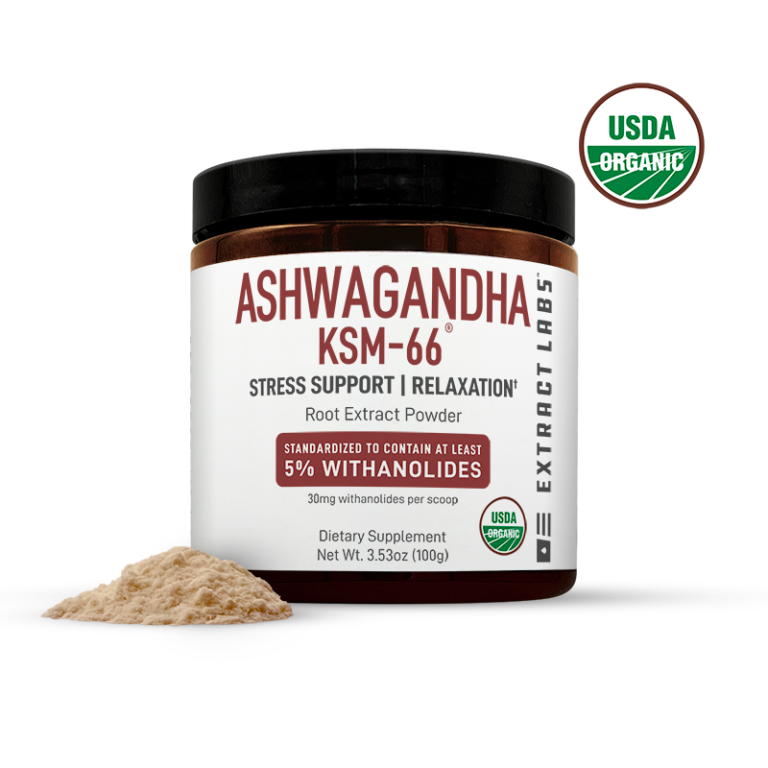
Organic KSM-66 Ashwagandha® Root Extract Powder
Bring a little intention to your routine with Organic Ashwagandha Root Extract Powder. Each level scoop delivers 600 mg of KSM-66 Ashwagandha® root extract to support a healthy response to occasional stress and support relaxation.† Mix it into water or your favorite beverage, enjoy it with a meal, and make this moment yours.
$59.99
See detailsBefore You Add Ashwagandha to Your Routine
In the studies the NIH reviewed, ashwagandha was generally well tolerated for up to about three months, and commonly reported side effects such as stomach upset and drowsiness were usually mild. Its long-term safety isn’t known, and it isn’t right for everyone. Talk with your doctor or pharmacist first if you:
- Are pregnant or breastfeeding
- Have a thyroid condition or take thyroid medication
- Have a history of liver concerns
- Take medication for blood sugar, blood pressure or sleep, or one that suppresses the immune system
- Have a hormone-sensitive prostate condition
KSM-66 Questions
Is KSM-66 the same as ashwagandha?
What is the difference between KSM-66 and Sensoril?
How long has KSM-66 been studied?
Sources
- Office of Dietary Supplements, National Institutes of Health, “Ashwagandha: Is it helpful for stress, anxiety, or sleep?” Health Professional Fact Sheet, May 2, 2025.
- K. Chandrasekhar, Jyoti Kapoor and Sridhar Anishetty, “A Prospective, Randomized Double-Blind, Placebo-Controlled Study of Safety and Efficacy of a High-Concentration Full-Spectrum Extract of Ashwagandha Root in Reducing Stress and Anxiety in Adults,” Indian Journal of Psychological Medicine, July-Sept. 2012.
- VRM Media, “Kartikeya Baldwa, CEO, Ixoreal Biomed,” Nutrition Industry Executive, March 1, 2024.
- Agricultural Marketing Service, U.S. Department of Agriculture, “USDA Certified Organic: Understanding the Basics,” USDA AMS, accessed Oct. 23, 2026.
- NutraIngredients-USA, “NutraGenesis lauds Sensoril’s double digit growth,” NutraIngredients-USA, May 2, 2014.