Sometimes the most consequential laws don’t arrive with headlines or press conferences. They arrive buried—stacked inside hundreds of pages of must-pass legislation, bundled with unrelated policies, and rushed through Congress with an up-or-down vote.
That’s exactly how the latest federal hemp amendment became law.
In November 2025, Congress passed a sweeping funding package to keep the federal government running. Tucked inside that bill was an amendment that dramatically reshapes how hemp-derived products are regulated in the United States. It received little public attention at the time, but its potential impact on consumers, small businesses, and the broader hemp industry is enormous.
If implemented as written, the amendment would introduce a nationwide cap of 0.4 milligrams of total THC per finished product container, regardless of product type, size, or number of servings. That shift alone could force widespread reformulation or outright removal of many products currently legal under federal law.
Enforcement isn’t scheduled to begin until November 12, 2026, leaving a one-year window where products compliant with the 2018 Farm Bill remain federally legal. But make no mistake: the clock is ticking, and the fight over this rule is already underway.
Congress quietly passed a federal amendment in late 2025 that could significantly change how hemp products are regulated nationwide. The new rule introduces a strict 0.4 mg total THC limit per finished product container, regardless of serving size or format, and is scheduled to take effect on November 12, 2026.
While products compliant with the 2018 Farm Bill remain legal for now, many full spectrum and THC-containing hemp products could face reformulation or removal if the rule stands. Industry groups, consumers, and lawmakers from both parties are actively pushing back, advocating for science-based revisions before enforcement begins.
What Is the 2026 Hemp THC Limit?
This amendment represents the most significant federal change to hemp regulation since the 2018 Farm Bill, which legalized hemp by defining it as cannabis containing no more than 0.3% delta-9 THC by dry weight.
That definition focused on the plant and its ingredients.
The new amendment shifts the focus to the finished product—and that distinction changes everything.
Instead of evaluating THC as a percentage, regulators would look at the total amount of THC in an entire package, regardless of how it’s used or consumed. A single threshold applies to all formats: oils, gummies, beverages, capsules—everything.
For the hemp industry, this isn’t a minor tweak. It’s a fundamental change in how legality is measured, enforced, and understood.
How This Amendment Became Law
These changes were not debated as part of a standalone hemp or cannabis bill. Instead, they were added as an amendment to the Continuing Appropriations Act (H.R. 5371)—a funding bill Congress passed to keep the federal government running and avoid a shutdown.
When provisions like this are attached to must-pass spending legislation, lawmakers are often forced into a binary choice: vote yes, or risk shutting down the government. That structure leaves little room for nuanced debate, industry input, or committee review—the very processes that typically shape agricultural and regulatory policy. According to the Washington Post, the provision was “tucked into the legislation signed into law by President Donald Trump that ended the longest government shutdown in U.S. history.”
The amendment was primarily championed by Senator Mitch McConnell (R-KY) and Representative Andy Harris (R-MD), who argued it was necessary to address what they described as “unintended consequences” of the 2018 Farm Bill—specifically, hemp products that technically met legal definitions while delivering intoxicating levels of THC.
Not everyone agreed. An effort led by Senator Rand Paul (R-KY) to remove the provision failed, but the final vote—76–24—made one thing clear: opposition exists on both sides of the aisle. This is not a partisan issue. It’s a policy debate about scope, science, and proportionality.
What Actually Changes Under the New Definition of Hemp
The amendment introduces two major changes:
1. “Total THC” Replaces Delta-9 THC
Rather than measuring delta-9 THC alone, regulators would now consider total THC, which includes all THC variants, such as THCA once converted. This broader measurement expands what counts toward the legal threshold.
2. A New Finished-Product Cap
While the 0.3% THC limit remains in place for raw hemp plant material, finished products would be subject to a new rule:
No more than 0.4 milligrams of total THC per container.
Not per serving.
Not per dose.
Per package.
The amendment also directs regulators to prohibit synthetic cannabinoids, including delta-8 and delta-10 THC, along with other cannabinoids deemed not naturally occurring in hemp.
The FDA has been given 90 days to publish guidance clarifying which cannabinoids fall under this category. Until then, uncertainty remains.
Which CBD Products Will Still Be Legal After November 2026?
While final outcomes will depend on FDA interpretation and enforcement priorities, the legislation as written suggests clear trends.
Likely to Remain Federally Compliant
Likely to Face Compliance Challenges
CNBC reports that “industry executives said that threshold will wipe out 95% of the $28 billion hemp retail market when it takes effect in a year.”
A Real-World Example: Why the Container Limit Changes Everything
Consider a common hemp-derived gummy product.
Under the 2018 Farm Bill, a container holding 30 gummies, each weighing 5 grams and formulated with 10 mg of Delta-9 THC, could remain federally compliant based on dry weight alone.
Under the new rule, that same container would be limited to 0.4 mg of total THC, not per serving, but across the entire package.
Meeting that requirement wouldn’t involve a small adjustment. It would require a complete reformulation, reducing THC content to trace or non-detectable levels. According to ABC News, “for reference, a single hemp gummy typically contains 2.5 to 10 milligrams of THC.”
The law doesn’t evaluate consumer intent, dosing patterns, or product design. It evaluates only the total THC present in the finished product container.
Why Congress Took This Approach
Supporters of the amendment argue that dry-weight measurements created loopholes, particularly for edibles allowing products to remain technically legal while delivering effects similar to state-regulated cannabis products.
Concerns cited include:
Critics, however, argue that a single nationwide cap fails to account for product diversity, responsible use, or the realities of hemp manufacturing, especially for small and mid-sized businesses. The U.S. Hemp Roundtable warns the decision “threatens to eliminate America’s $28.4 billion hemp industry and jeopardizes more than 300,000 American jobs.”
What This Means for Consumers
For millions of Americans who use hemp-derived products, these changes could affect availability, formulation, and cannabinoid profiles.
Full spectrum products, valued for their naturally occurring trace cannabinoids may become harder to find in their current form. THC free and broad spectrum options are expected to remain widely available, though some consumers may notice differences in experience or dosing.
As always, transparancy matters. Third-party testing, clear labeling, and informed decision making will be more important then ever. If you’re unsure which formulation fits your preferences, it can help to review the differences between full spectrum, broad spectrum, and THC free products.
Common Questions About the 2026 THC Rules
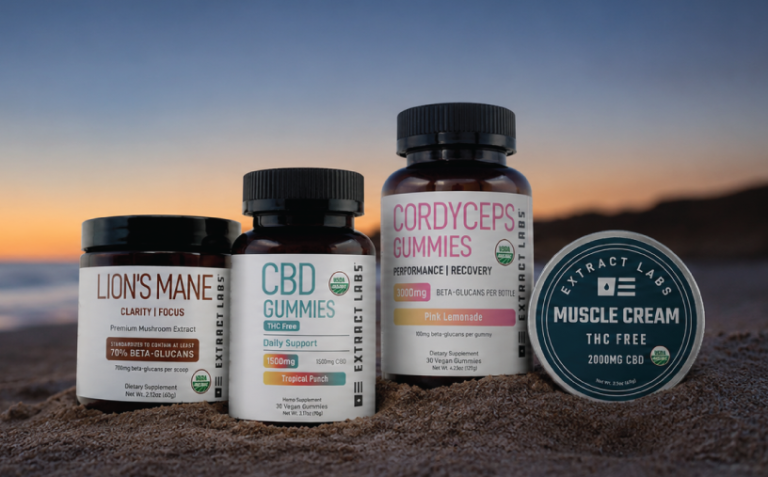
If you’re reviewing your options ahead of potential regulatory changes, many consumers start by exploring products that are designed to be THC free or broad spectrum. Below are a few examples of our products that will remain more widely available under stricter THC thresholds.
As always, transparency matters. Third-party testing, clear labeling, and informed decision-making will be more important than ever.
Our Commitment to You
Since 2016, Extract Labs has operated with a simple philosophy: do things the right way, even when the rules change.
We’ve navigated evolving regulations before, and we’re prepared to do so again—without compromising on quality, safety, or transparency. Our portfolio includes a wide range of THC free and broad spectrum products, supported by rigorous third-party testing and CO₂ extraction methods.
Regulations may evolve. Our standards won’t.
As this situation continues to develop, we remain committed to keeping our customers informed, supported, and confident in the choices they make.