Transparency and safety are paramount in the CBD industry. A Certificate of Analysis (COA) is a key document that ensures your CBD product is pure, safe, and accurately labeled. Understanding how to read a COA empowers you to make informed choices and guarantees you’re consuming a trustworthy product.
What is a CBD Certificate of Analysis (COA)?
A Certificate of Analysis is a third-party lab report that verifies the cannabinoid content, purity, and safety of CBD products. Reputable companies always provide a COA for each product batch to uphold transparency and consumer trust.
How to Read a CBD COA: Step-by-Step
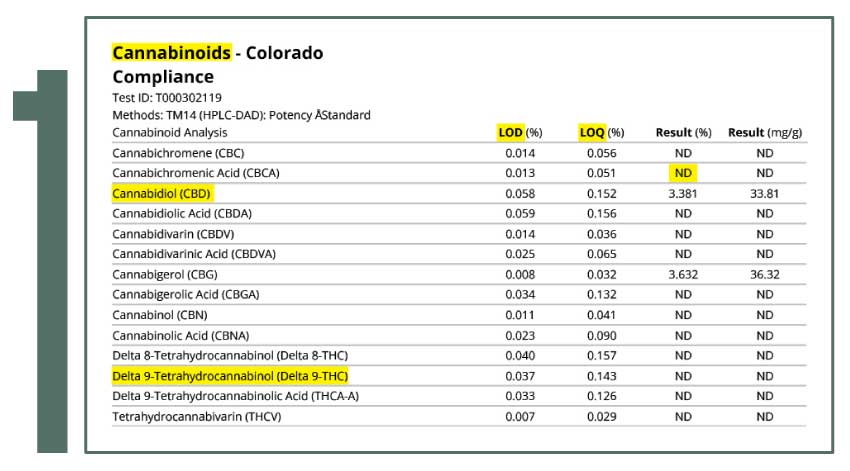
CANNABINOIDS PROFILE
The cannabinoid profile details the levels of CBD, THC, and other cannabinoids. Key terms to note:
- CBD (Cannabidiol): Non-psychoactive compound known for wellness benefits.
- THC (Tetrahydrocannabinol): Psychoactive compound, typically very low or non-detectable in CBD products.
- CBG, CBC, CBN: Additional cannabinoids that can contribute to the product’s effects.
Look for potency listed in mg/g or percentage (%) and the term ND (Not Detected), indicating a compound isn’t present in significant quantities.
Understanding Key Terms
- LOD (Limit of Detection): Smallest concentration the test can reliably detect.
- LOQ (Limit of Quantitation): Lowest concentration that can be precisely measured.
- ND (Not Detected): Indicates a compound wasn’t present at detectable levels.
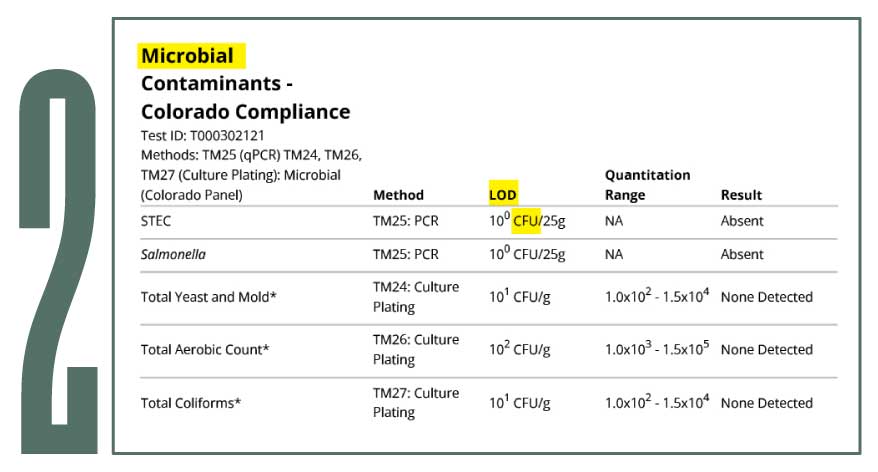
MICROBIAL CONTAMINANTS
This section ensures your product is free from harmful microorganisms. Results will typically show “None Detected” or specific numbers indicating safe levels.
Understanding Key Terms
- LOD (Limit of Detection): Smallest concentration the test can reliably detect.
- CFU (Colony Forming Units): Measures viable bacteria or fungal cells.
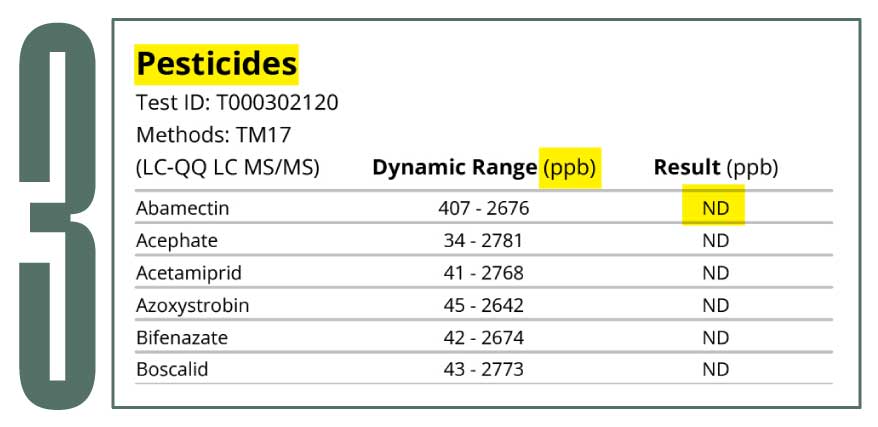
PESTICIDES
Pesticide testing confirms that your CBD product is free from harmful chemicals used during cultivation. A ND result means no pesticides were detected.
Understanding Key Terms
- PPB (Parts Per Billion): Measurement unit for trace contaminants.
- ND (Not Detected): Indicates a compound wasn’t present at detectable levels.
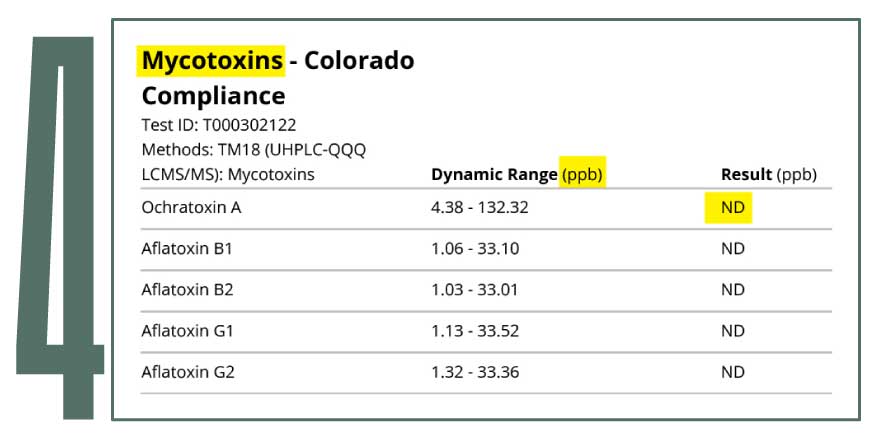
MYCOTOXINS
Mycotoxins are toxic compounds from mold or fungi. A clean product will show ND, ensuring it’s safe for consumption.
Understanding Key Terms
- PPB (Parts Per Billion): Measurement unit for trace contaminants.
- ND (Not Detected): Indicates a compound wasn’t present at detectable levels.
Red Flags to Watch Out For
- Missing or incomplete information.
- High levels of contaminants.
- COA not matching the product description.
Why Trust Matters
Transparency via clearly presented COAs is essential for trust and safety. Always purchase from brands committed to transparency, quality, and third-party testing.
Knowing how to read and understand a COA is critical for choosing safe, effective CBD products. Always check the COA before purchasing, and trust brands like Extract Labs, dedicated to transparency and quality assurance.
How to Check the Cannabinoid Amount:
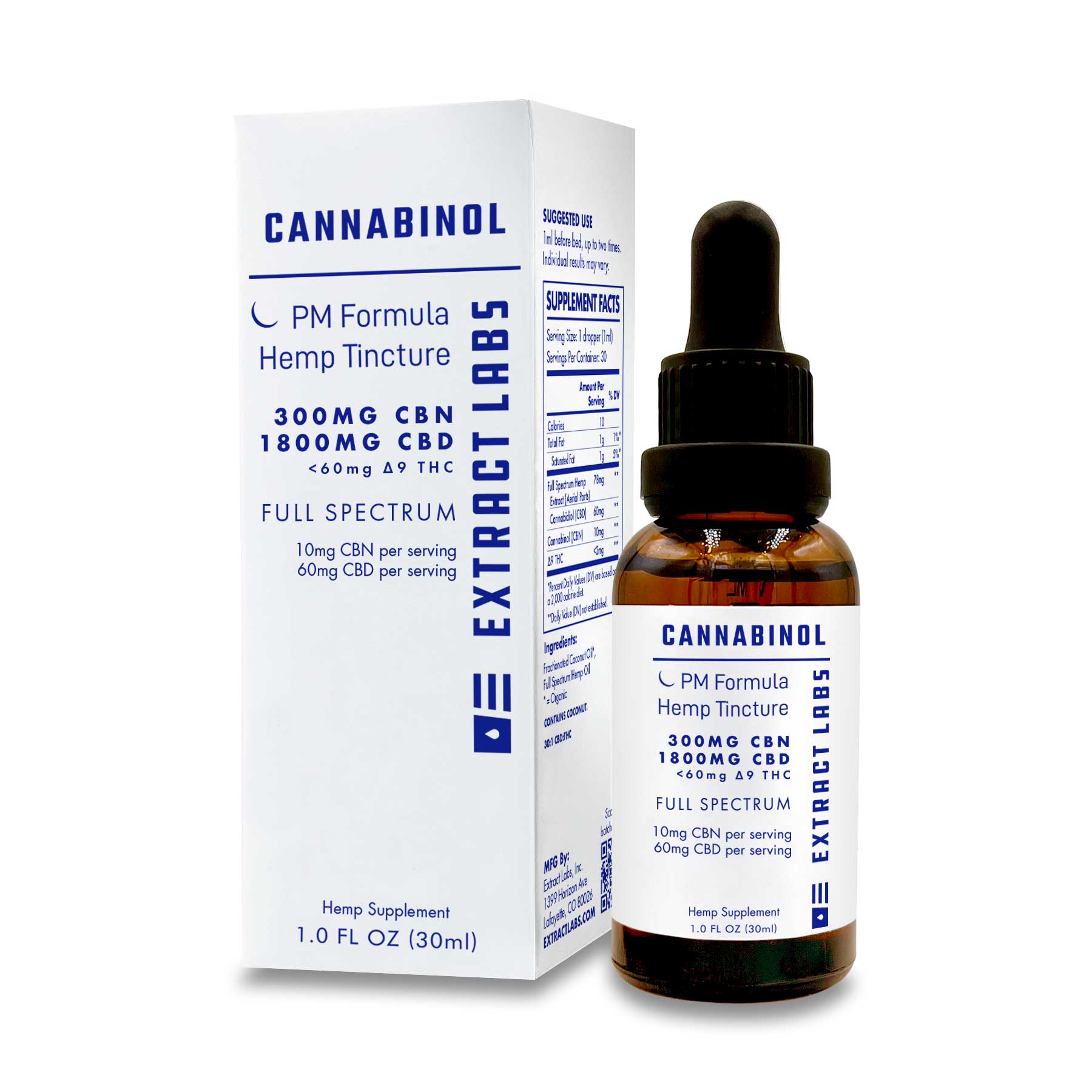
TINCTURES
- The COA shows CBD in mg/g (milligrams per gram).
- To estimate total CBD, just multiply the mg/g by the bottle size in ml.
- For tinctures, it’s easiest to think of 1mL ≈ 1g.
Example:
If your tincture is 30mL and the COA shows 200mg/g of CBD: 200 x 30 = 6000mg total CBD.
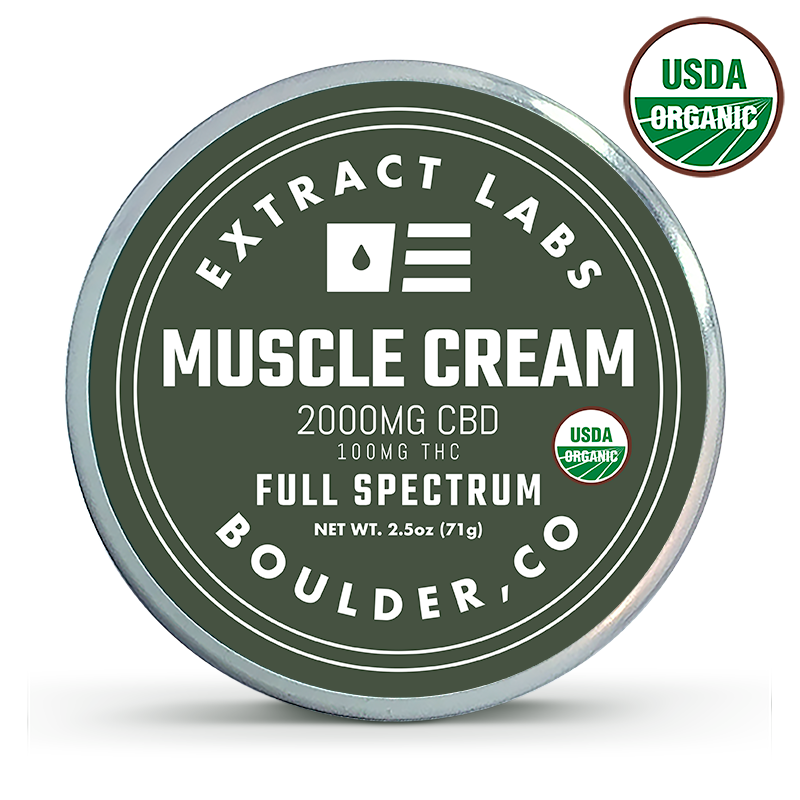
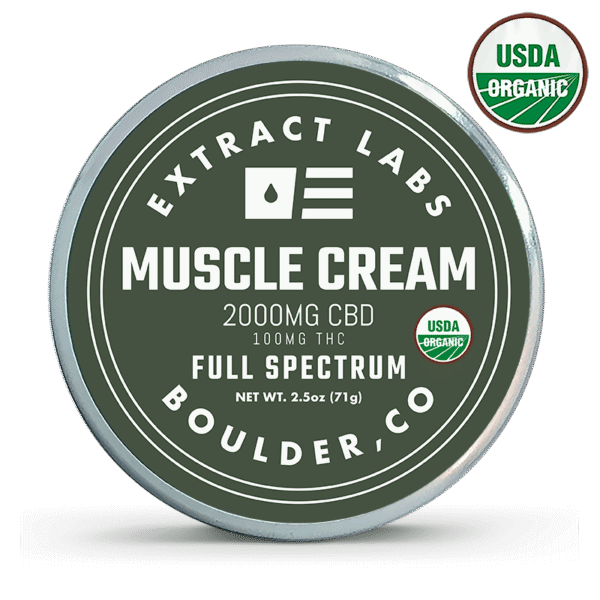
MUSCLE CREAM
- The COA shows CBD in mg/g (milligrams per gram).
- To estimate the total CBD in the container, multiply the mg/g by the product’s weight in grams.
Example:
If your cream weighs 71g and the COA shows 28.17mg/g of CBD: 26.25 x 71 = 1864mg total CBD.
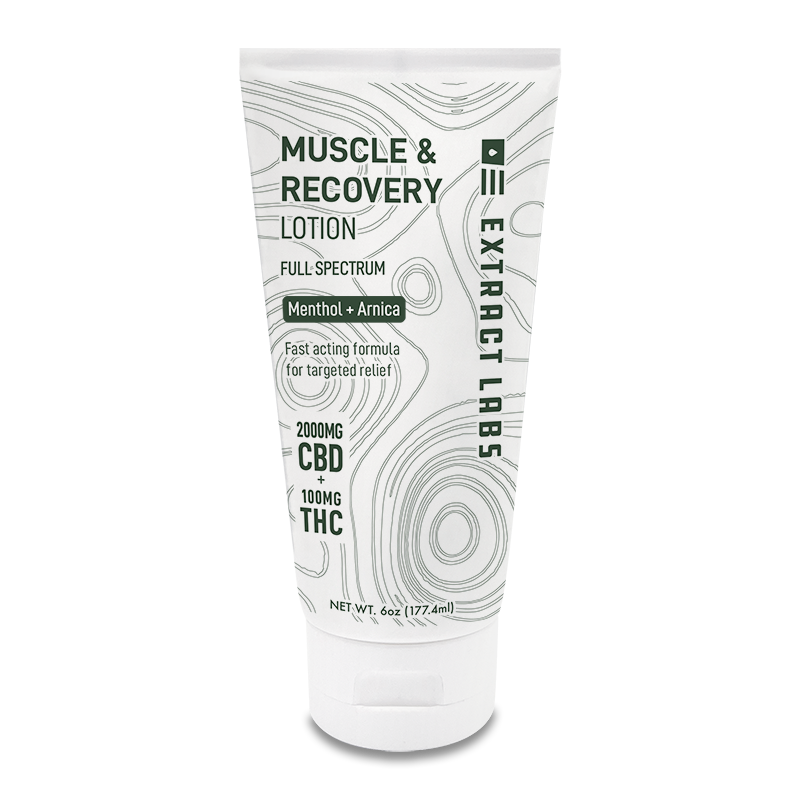
LOTION
- The COA shows CBD in mg/g (milligrams per gram).
- To estimate the total CBD in the bottle, multiply the mg/g by the product’s weight in grams.
Example:
If your lotion weighs 170g (which is about 6oz as shown on the label) and the COA shows 11.76mg/g of CBD: 11.76 x 170 = 2000mg total CBD.
GUMMIES
- The COA shows CBD in mg/g (milligrams per gram).
- To figure out how much CBD is in each gummy, you need to know how much one gummy weighs.
How to find the gummy weight:
Take the total weight of the jar (in grams) and divide by the number of gummies.
Example:
- Jar weight = 90g
- Number of gummies = 30
- 90g ÷ 30 = 3g per gummy
Now calculate the CBD per gummy: If the COA says 16.67mg/g of CBD: 16.67 x 3g = 50mg CBD per gummy
SOFTGELS
- The COA shows CBD in mg/g (milligrams per gram).
- Each softgel holds 0.5mL, which weighs about 0.46g.
Example:
If the COA shows 71.74mg/g of CBD: 71.74 x 0.46g = 33mg CBD per softgel..
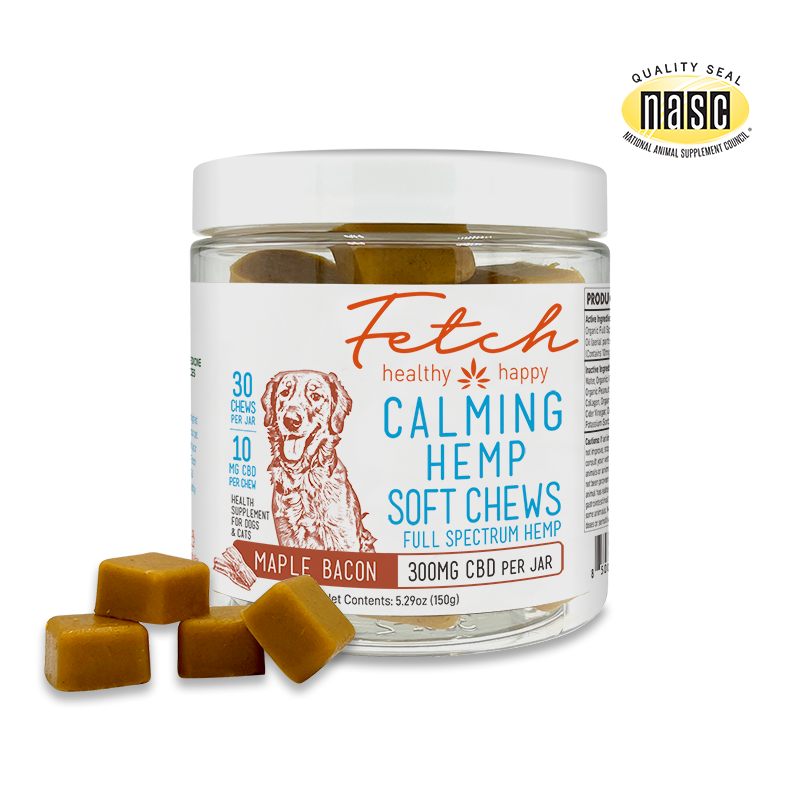
PET CHEWS
- The COA shows CBD in mg/g (milligrams per gram).
- To find the CBD per chew, multiply the mg/g by the weight of one chew.
How to find the chew weight:
Divide the total jar weight by the number of chews.
Example:
- Jar weight = 150g
- Number of chews = 30
- 150g ÷ 30 = 5g per chew
Now calculate CBD per chew: If the COA says 2mg/g of CBD: 2 x 5g = 10mg CBD per chew
TANKS/DISPOSABLES
• The COA shows cannabinoid content in mg/g (milligrams per gram of oil).
• Since most vapes hold 1 gram (1g) of oil, the mg/g value tells you how much of each cannabinoid is in the whole vape.
Example:
(1g CBD Vape Cart):
CBD: 500mg/g = 500mg total CBD in the vape
ISOLATES
- The COA shows CBD content in mg/g (milligrams per gram).
- Isolates are highly concentrated, usually around 95-99% purity, so the CBD number should be very close to 1000mg/g.
Example (CBD Isolate):
- CBD: 974.20mg/g = 97.42% purity
- This means each gram of isolate contains 974.2mg of CBD.
Tip:
You can use this same method to calculate the total amount of any cannabinoid listed on the COA (like CBD, CBN, CBG, etc.). Just multiply the mg/g value by the product’s weight or volume.
Keep in mind:
There may be slight differences between the COA results and the amount listed on your product label. This is because both natural variations in production and small differences in lab testing can affect the exact numbers. Most industry standards allow about a ±10% range for cannabinoid amounts.
Featured Products
Customer Favorites
Explore our most-loved CBD essentials, handpicked for wellness routines that truly work.